
SAMA expectations for model risk when banks deploy AI
SAMA Expectations for Model Risk Management in AI Deployment by Saudi Banks
Real-time Fraud & Solvency Analytics
Enterprise analytics programme delivered with a global strategy partner, fraud detection, solvency, and prudential analytics.
- Advanced Fraud DetectionAI model to detect frauds in real time
- Data-driven Decision MakingAnalytical dashboards & KPIs
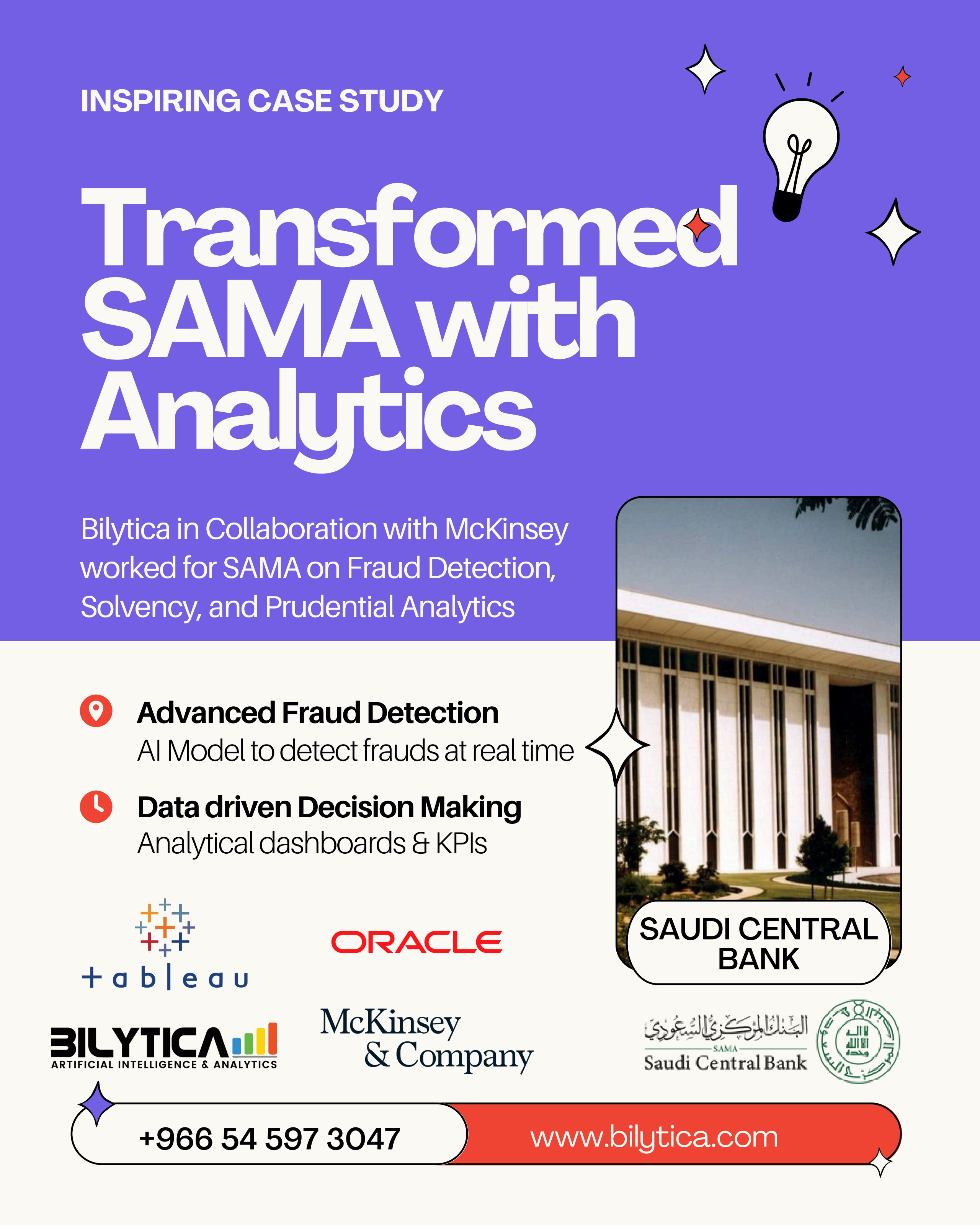
“An enterprise-wide analytics transformation, real-time AI fraud detection, solvency monitoring, and prudential analytics. Data-driven decision making is now at the core of regulator operations.”
Introduction
As artificial intelligence (AI) continues to transform various sectors, particularly banking, Saudi Arabia and other Gulf Cooperation Council (GCC) countries are closely following regulatory guidelines to ensure the safe and ethical deployment of AI technologies. The Saudi Arabian Monetary Authority (SAMA) plays a crucial role in setting these expectations and standards, ensuring that financial institutions in the region are equipped to handle the complexities of AI model risk management.
The Role of SAMA in AI Regulation
SAMA, as the central bank and regulatory authority of Saudi Arabia, is responsible for overseeing the financial sector and ensuring its stability and efficiency. With the increasing adoption of AI in banking, SAMA has issued guidelines and regulations that mandate banks to manage and mitigate the risks associated with AI models. These guidelines are essential for maintaining public trust, ensuring compliance with local and international standards, and safeguarding the integrity of financial systems.
Understanding Model Risk in AI Deployment
Model risk in the context of AI refers to the potential risks and uncertainties that can arise from the use of AI models in financial decision-making processes. These risks can be categorized into several types, including:
- Model Design Risk: This includes issues related to the design, development, and validation of AI models. Poorly designed models can lead to inaccurate predictions and decision-making errors.
- Model Implementation Risk: This risk arises from the implementation of AI models in real-world scenarios. Issues such as data quality, data drift, and model integration can affect the performance of AI systems.
- Model Operational Risk: This involves the operational challenges associated with the deployment and maintenance of AI models. Factors such as system downtime, human error, and cybersecurity threats can impact the reliability of AI models.
- Model Strategic Risk: This risk is related to the strategic implications of AI model deployment. Banks must consider the long-term impact of AI on their business operations, customer relationships, and competitive positioning.
SAMA's Approach to Model Risk Management
To address these risks, SAMA has outlined several key expectations for banks in terms of model risk management when deploying AI. These expectations are designed to ensure that banks can effectively identify, assess, and mitigate the risks associated with AI models. Here are some of the critical areas of focus:
Data Quality and Integrity
One of the foundational aspects of model risk management is ensuring the quality and integrity of the data used by AI models. SAMA expects banks to establish robust data governance frameworks that ensure data accuracy, completeness, and relevance. Banks are required to conduct regular data quality assessments and implement mechanisms to address any data issues that may arise.
Model Validation and Testing
Model validation and testing are essential components of SAMA's guidelines. Banks must develop comprehensive validation and testing processes to ensure that AI models are performing as intended. This includes conducting both quantitative and qualitative tests to evaluate the accuracy, robustness, and fairness of AI models. SAMA expects banks to document these validation processes and maintain records for regulatory review.
Scenario Analysis and Stress Testing
Scenario analysis and stress testing are crucial for understanding the potential risks and impacts of AI models under different scenarios. SAMA expects banks to conduct regular scenario analysis to identify potential risks and stress test AI models to ensure their resilience in adverse conditions. This helps banks to develop contingency plans and make informed decisions about AI model deployment.
Governance and Oversight
Effective governance and oversight are vital for managing model risk in AI deployment. SAMA expects banks to establish clear governance structures that ensure the involvement of senior management and board members in model risk management. Banks should also have dedicated teams responsible for monitoring and maintaining AI models to ensure continuous compliance with regulatory requirements.
Conclusion
In this first part of our three-part series, we have introduced the concept of model risk management in AI deployment and highlighted the key expectations set by SAMA for Saudi banks. The next sections will delve deeper into specific strategies and best practices for managing model risk, providing actionable insights for enterprise decision-makers in the region. Stay tuned for more detailed guidance on how to comply with SAMA's guidelines and ensure the safe and effective deployment of AI in the banking sector.
Enhancing Model Risk Management in AI-Driven Banking with SAMA Guidelines
Understanding SAMA's Role in Model Risk Management
The Saudi Arabian Monetary Authority (SAMA) plays a pivotal role in ensuring the stability and resilience of the financial sector in Saudi Arabia and the Gulf Cooperation Council (GCC) region. As banks increasingly integrate artificial intelligence (AI) into their operations, SAMA's guidelines on model risk management have become a cornerstone for financial institutions aiming to maintain regulatory compliance while leveraging AI technologies. This section delves into the specific areas where SAMA's guidelines are particularly relevant for model risk management in AI-driven banking.
Regulatory Framework and SAMA’s Guidelines
SAMA has established a robust regulatory framework to manage model risk, which includes guidelines tailored to AI and machine learning (ML) applications. These guidelines are designed to ensure that banks can effectively manage the risks associated with AI models, including bias, data quality, and performance degradation. Key components of SAMA's guidelines include:
- Model Development Lifecycle: SAMA requires banks to follow a structured lifecycle for AI models, from initial development through deployment and ongoing monitoring. This includes rigorous testing and validation processes to ensure that models are reliable and accurate.
- Data Management: Ensuring that the data used for training AI models is of high quality and representative of the real-world scenarios in which the models will be used. Banks must also maintain proper data governance practices to prevent data breaches and ensure compliance with data protection regulations.
- Model Validation and Monitoring: Continuous monitoring of AI models to detect and address any issues that arise. This includes regular performance reviews and updates to the models as new data becomes available or business conditions change.
Ensuring Compliance with SAMA’s Model Risk Management Standards
Compliance with SAMA’s guidelines on model risk management is not only a legal requirement but also a strategic imperative for banks. Here are some actionable steps that banks can take to ensure they meet SAMA’s standards:
- Establish a Model Risk Management Committee: This committee should include representatives from various departments, such as IT, risk management, and compliance, to ensure a holistic approach to model risk management.
- Implement Robust Testing Protocols: Conduct extensive testing of AI models using both historical and simulated data to identify potential issues and mitigate risks before deployment.
- Regularly Review and Update Models: AI models should be reviewed and updated regularly to ensure they remain accurate and relevant. This includes periodic retraining with new data and incorporating feedback from model users.
Mitigating Bias in AI Models
Bias in AI models can lead to significant risks, including unfair lending practices, discriminatory customer treatment, and reputational damage. SAMA’s guidelines emphasize the importance of addressing bias in AI models to ensure fair and equitable treatment of all customers. Here are some strategies to mitigate bias:
- Diverse Training Data: Ensure that the data used to train AI models is diverse and representative of the population it will serve. This helps to reduce the risk of biased outcomes.
- Regular Audits: Conduct regular audits of AI models to identify and address any biases that may have crept in during the model development process.
- Transparency and Explainability: Use explainable AI techniques to ensure that the decision-making process of AI models is transparent and understandable. This helps to build trust among customers and regulators.
Conclusion
Adhering to SAMA’s guidelines on model risk management is essential for banks in Saudi Arabia and the GCC region as they deploy AI technologies. By following the structured lifecycle, robust data management practices, and continuous monitoring and validation, banks can ensure that their AI models are reliable, accurate, and aligned with regulatory requirements. Moreover, addressing bias in AI models is crucial for maintaining fairness and transparency in financial services. In the next part of this series, we will explore practical implementation strategies and case studies to further enhance model risk management in AI-driven banking.
Enhancing Model Risk Management in AI Deployment: SAMA's Guidelines for Saudi Banks
Compliance with SAMA Guidelines: A Prerequisite for AI Integration
In the rapidly evolving landscape of financial technology, Saudi Arabian Monetary Authority (SAMA) has played a pivotal role in shaping the regulatory framework for artificial intelligence (AI) adoption. For Saudi banks, adhering to SAMA’s guidelines on model risk management is not just a compliance issue; it is a strategic imperative. This section explores how banks can align their AI strategies with SAMA’s expectations, ensuring that risk management is a core component of their AI deployments.
Key Components of SAMA’s Model Risk Management Guidelines
SAMA’s guidelines emphasize the importance of robust model risk management practices. These guidelines cover several critical areas that banks must address to mitigate risks associated with AI deployments:
-
Risk Identification and Assessment: Banks must establish comprehensive risk assessment frameworks to identify potential risks associated with AI models. This includes understanding the data sources, model assumptions, and potential biases that could impact the model’s performance.
-
Model Validation: Regular validation of AI models is crucial to ensure their reliability and accuracy. Banks should develop robust validation processes that include both internal and external audits to verify the model’s performance against predefined benchmarks.
-
Model Governance: Effective governance is essential for ensuring that AI models are developed, deployed, and maintained in accordance with regulatory requirements. This includes clear roles and responsibilities, regular updates, and continuous monitoring of the models’ performance.
-
Data Quality and Privacy: Data quality is a critical factor in the success of AI models. Banks must ensure that they have access to high-quality, relevant, and up-to-date data. Additionally, they must comply with data privacy regulations to protect customer information and maintain trust.
-
Scenario Analysis and Stress Testing: Banks should conduct scenario analysis and stress tests to evaluate the resilience of AI models under various market conditions. This helps in identifying potential weaknesses and developing strategies to mitigate risks.
Implementing a Holistic Approach to Model Risk Management
To effectively manage model risk in AI deployments, Saudi banks must adopt a holistic approach that integrates these key components. Here are some actionable steps banks can take:
-
Establish a Model Risk Management Framework: Develop a comprehensive framework that includes risk assessment, validation, governance, data management, and scenario analysis. This framework should be tailored to the specific needs of the bank and the AI models being deployed.
-
Leverage Technology and Tools: Utilize advanced technology and tools to enhance model risk management. This includes using data analytics platforms, machine learning tools, and automation technologies to streamline the risk management process.
-
Strengthen Internal Controls: Enhance internal controls to ensure that AI models are developed and deployed in a controlled and compliant manner. This includes implementing robust data governance policies, conducting regular audits, and providing training to staff.
-
Collaborate with External Experts: Engage with external experts and consultants to gain insights and best practices in model risk management. This collaboration can provide banks with a broader perspective and help in identifying potential risks that may not be immediately apparent.
-
Stay Informed About Regulatory Changes: Regulatory landscapes are constantly evolving, and it is crucial for banks to stay informed about any changes in SAMA’s guidelines or other relevant regulations. Regularly review and update the model risk management framework to ensure it remains compliant and effective.
Conclusion
In conclusion, as Saudi banks continue to integrate AI into their operations, it is essential to prioritize model risk management in accordance with SAMA’s guidelines. By adopting a holistic approach that addresses key components such as risk identification, model validation, governance, data quality, and scenario analysis, banks can ensure the safe and effective deployment of AI models. This not only helps in mitigating risks but also enhances the overall reliability and performance of AI-driven financial solutions. As the regulatory landscape continues to evolve, staying vigilant and proactive in model risk management will be crucial for maintaining a competitive edge in the digital age.
Want These Results for Your Company?
Book a free AI assessment and see exactly how much you can save, with numbers, not buzzwords.